Clean Air Zones in the UK
Clean Air Zones (CAZ) are local schemes used by cities outside London to cut traffic pollution. They work in a similar way to London’s ULEZ, but most of them only cover compact city centres rather than whole urban regions. This guide explains where the main CAZ schemes are, how they differ from ULEZ, and what happened in cities like Leeds and Greater Manchester that decided not to run charging zones after all.
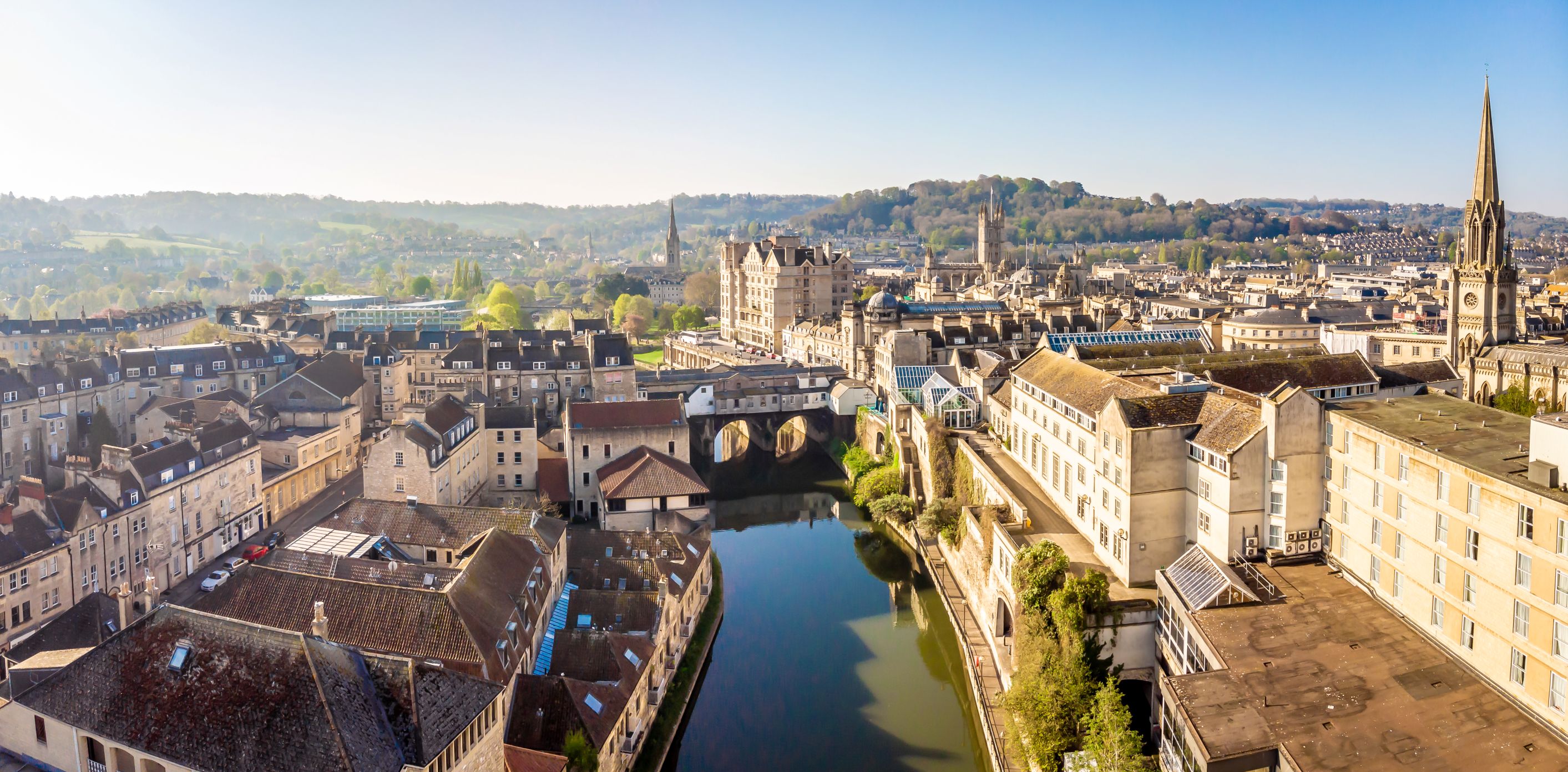
Figure 1: Aerial view of a UK city centre where a Clean Air Zone applies.
What is a Clean Air Zone?
A Clean Air Zone is an area where local authorities can charge the most polluting vehicles to drive, with the aim of bringing nitrogen dioxide (NO2) levels and other pollutants back within legal limits as quickly as possible. CAZ schemes are set up under national government guidance but run by local councils. They typically apply 24 hours a day, 7 days a week, and use Automatic Number Plate Recognition (ANPR) cameras in a similar way to London’s ULEZ. The difference is scale: while London’s ULEZ covers almost all of Greater London, English CAZ schemes such as Bath, Birmingham, Bradford, Bristol, Portsmouth, Sheffield and Tyneside (Newcastle and Gateshead) generally focus on relatively small city-centre areas of around 1–3 square miles, plus key approach roads.
Each CAZ is given a class from A to D, which determines which types of vehicles can be charged. Local authorities must still meet national minimum standards, based on Euro emissions limits, but they have flexibility in how they apply charges and exemptions. For example, some cities charge buses, coaches, taxis and heavy goods vehicles only, while others also charge private cars if they do not meet the relevant Euro standard.
Where are Clean Air Zones in England?
As of 2025, there are seven charging Clean Air Zones in England outside London: Bath, Birmingham, Bradford, Bristol, Portsmouth, Sheffield and Tyneside (covering parts of Newcastle and Gateshead). These zones are all located in and around their city centres, targeting the busiest streets and main radial routes where NO2 levels were found to be above legal limits.
In addition, Oxford operates a separate Zero Emission Zone (ZEZ) in a small number of central streets, where non-electric vehicles are charged during the day. This is not called a CAZ in law, but in practice it works in a similar way and is focused entirely on the city centre core.
| City / area | Scheme type | Class | Vehicles that can be charged | Approx. area | Notes |
|---|---|---|---|---|---|
| Bath | Clean Air Zone | C | Buses, coaches, taxis, private hire vehicles, HGVs, vans, minibuses (not private cars) | ≈ 1.2 sq miles | City-centre focused zone including key central routes and river crossings. |
| Birmingham | Clean Air Zone | D | Buses, coaches, taxis, private hire vehicles, HGVs, vans, minibuses, cars | ≈ 3.0 sq miles | Covers the ring road around the city centre and inner core streets. |
| Bradford | Clean Air Zone | C | Buses, coaches, taxis, private hire vehicles, HGVs, vans, minibuses (not private cars) | ≈ 9.4 sq miles | Includes city centre and a wider cordon capturing main radial and orbital roads. |
| Bristol | Clean Air Zone | D | Buses, coaches, taxis, private hire vehicles, HGVs, vans, minibuses, cars | ≈ 1.2 sq miles | Centred on the city centre and harbourside, including key routes across the river. |
| Portsmouth | Clean Air Zone | B | Buses, coaches, taxis, private hire vehicles, HGVs | ≈ 1.2 sq miles | Targeted around the city centre and main approach roads on Portsea Island. |
| Sheffield | Clean Air Zone | C | Buses, coaches, taxis, private hire vehicles, HGVs, vans, minibuses (not private cars) | ≈ 0.9 sq miles | Covers the inner ring road and key city-centre streets. |
| Tyneside (Newcastle & Gateshead) | Clean Air Zone | C | Buses, coaches, taxis, private hire vehicles, HGVs, vans, minibuses (not private cars) | ≈ 0.94 sq miles | Includes central areas on both sides of the River Tyne and key bridges. |
| Oxford (ZEZ pilot) | Zero Emission Zone | n/a | Charges all non-electric vehicles on a small set of central streets | Small number of city-centre streets | Pilot scheme launched in 2022 in the very heart of Oxford city centre. |
| London | ULEZ (not a CAZ) | n/a | Charges non-compliant cars, vans, motorcycles and specialist vehicles | Most of Greater London | Much larger than typical CAZ – included here for comparison of scale. |
Class and area data for Clean Air Zones are based on the official government list of CAZ cities and their sizes, which confirms that English CAZ schemes are focused on relatively compact city-centre areas compared with London’s ULEZ.
Leeds: a Clean Air Zone that never needed to charge
Leeds is often mentioned in the CAZ story because it was one of the first cities directed to plan a charging zone, but in the end it never had to switch the cameras on. A joint review by Leeds City Council and central government in 2020 found that businesses had upgraded to cleaner vehicles faster than expected, so air quality targets were being met without the need to levy CAZ charges. As a result, the planned charging Clean Air Zone was formally abandoned.
Leeds still monitors air quality and continues to work on reducing pollution, but the example shows that, in some cases, the threat of a CAZ, combined with targeted funding and fleet upgrades, can achieve the same outcome as a live charging zone. It also illustrates that CAZ schemes are meant to be a tool for reaching legal limits quickly, not a permanent tax: once compliance is secured and maintained, charges can be scaled back or, in Leeds’ case, never introduced at all.
Greater Manchester: from proposed CAZ to investment-led plan
Greater Manchester followed a different path. The original plan was for a large, region-wide Class C charging Clean Air Zone, which would have applied to vans, buses, lorries, taxis and private hire vehicles across all ten local authority areas. After consultation, concerns were raised about the economic impact and the availability of compliant vehicles, particularly for small businesses and taxi drivers.
Following further evidence and negotiation with government, Greater Manchester secured approval in January 2025 for an investment-led, non-charging Clean Air Plan. Under this approach there is no charging CAZ and no daily fees for any vehicles. Instead, government funding is used for measures such as new lower- and zero-emission buses, support for cleaner taxis and local transport improvements, with modelling showing that this can still deliver legal NO2 levels in the required timescale.
Manchester’s experience is often described as a “failed” CAZ in public debate, but in policy terms it is better seen as a switch from a charging-led to an investment-led plan. The legal requirement is to bring pollution within limits as quickly as possible; the exact mix of charges, investment and support can differ between cities, depending on local circumstances.
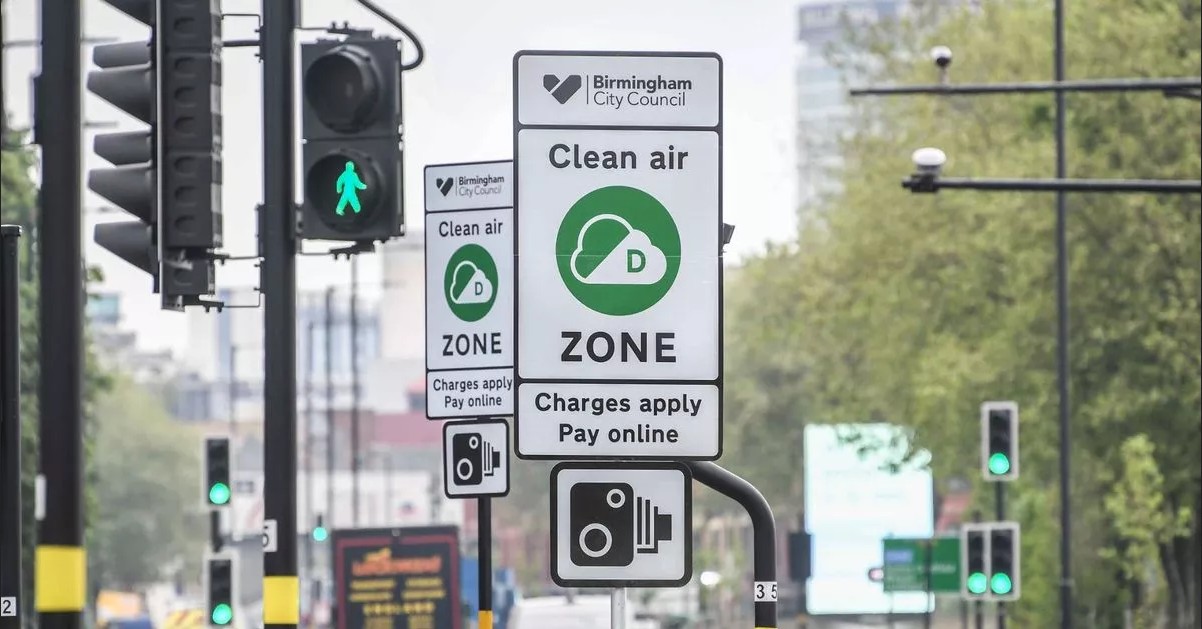
Figure 2: A Clean Air Zone sign and camera in a city-centre street.
How CAZ schemes compare to London’s ULEZ
While the basic principle is similar – charging the most polluting vehicles to improve air quality – there are some key differences between CAZ schemes and London’s ULEZ. The biggest is scale: CAZ schemes in cities like Bath, Bristol or Portsmouth are tightly focused on central areas where pollution problems were most severe, often around 1–3 square miles in size. By contrast, London’s ULEZ now covers almost the entire built-up area of Greater London, including many suburban and outer boroughs.
There are also differences in which vehicles are charged. Some CAZ schemes (Class B or C) only charge commercial vehicles such as buses, lorries, vans and taxis, while cars are not charged at all. Class D schemes – such as Birmingham and Bristol – are closer to ULEZ in that they can also charge private cars that do not meet Euro 4 (petrol) or Euro 6 (diesel) standards. Oxford’s ZEZ goes one step further, focusing on city-centre streets and applying charges to almost all non-electric vehicles during daytime hours.
See where CAZ and ULEZ schemes are on a map
If you regularly drive into or around London, it can be helpful to see at a glance how the London ULEZ compares in scale to other clean air schemes. Our map page brings together the ULEZ boundary and other relevant zones so you can plan routes, check whether your usual journeys are affected, and think about alternatives.
Quick summary
Clean Air Zones are city-centre based charging schemes designed to cut NO2 and other traffic-related pollution as fast as possible. Bath, Birmingham, Bradford, Bristol, Portsmouth, Sheffield and Tyneside all run CAZ schemes that focus on their central areas and main approach roads, with different classes determining which vehicles are charged. Oxford’s Zero Emission Zone pilot adds a stricter, city-centre only approach, while London’s ULEZ operates on a much larger, city-wide scale.
Leeds demonstrates that in some cases a CAZ can achieve its goals without ever charging, while Greater Manchester shows that an alternative, investment-led plan can replace a planned charging zone. For drivers, the key takeaway is simple: always check which scheme applies in the city you are visiting, and whether your vehicle meets the required emission standard before you travel.
References (Harvard style)
- Department for Environment, Food & Rural Affairs (Defra) (2025) Clean air zones. GOV.UK. Available at: https://www.gov.uk/guidance/driving-in-a-clean-air-zone (Accessed 11 December 2025).
- Leeds City Council (2020) Leeds’ Clean Air Zone has achieved its aims early and is no longer required, joint review finds. Available at: https://news.leeds.gov.uk/news/leeds-clean-air-zone-has-achieved-its-aims-early-and-is-no-longer-required-joint-review-finds (Accessed 11 December 2025).
- Government of the United Kingdom (2025) Government backs local plans for clean air in Greater Manchester. GOV.UK. Available at: https://www.gov.uk/government/news/government-backs-local-plans-for-clean-air-in-greater-manchester--2 (Accessed 11 December 2025).
- Greater Manchester Combined Authority (2025) Greater Manchester Clean Air Plan – investment-led non-charging plan. Local authority documentation, various pages (Accessed 11 December 2025).
- Oxfordshire County Council (2025) Oxford zero emission zone (ZEZ). Available at: https://www.oxfordshire.gov.uk/transport-and-travel/oxford-zero-emission-zone-zez (Accessed 11 December 2025).
- Oxford City Council (2025) Oxford Zero Emission Zone (ZEZ) Pilot. Available at: https://www.oxford.gov.uk/air-quality-projects/oxford-zero-emission-zone-zez-pilot (Accessed 11 December 2025).