What Is ULEZ?
The Ultra Low Emission Zone (ULEZ) is a London-wide clean air scheme that aims to cut harmful pollution from road traffic. It does this by setting strict exhaust emission standards for most vehicles and charging a daily fee to older petrol and diesel vehicles that do not meet those standards. The focus is on reducing pollutants such as nitrogen oxides (NOx), fine particulate matter (PM2.5) and other exhaust emissions which are linked to breathing and heart problems and are considered one of the biggest environmental risks to health in the UK.
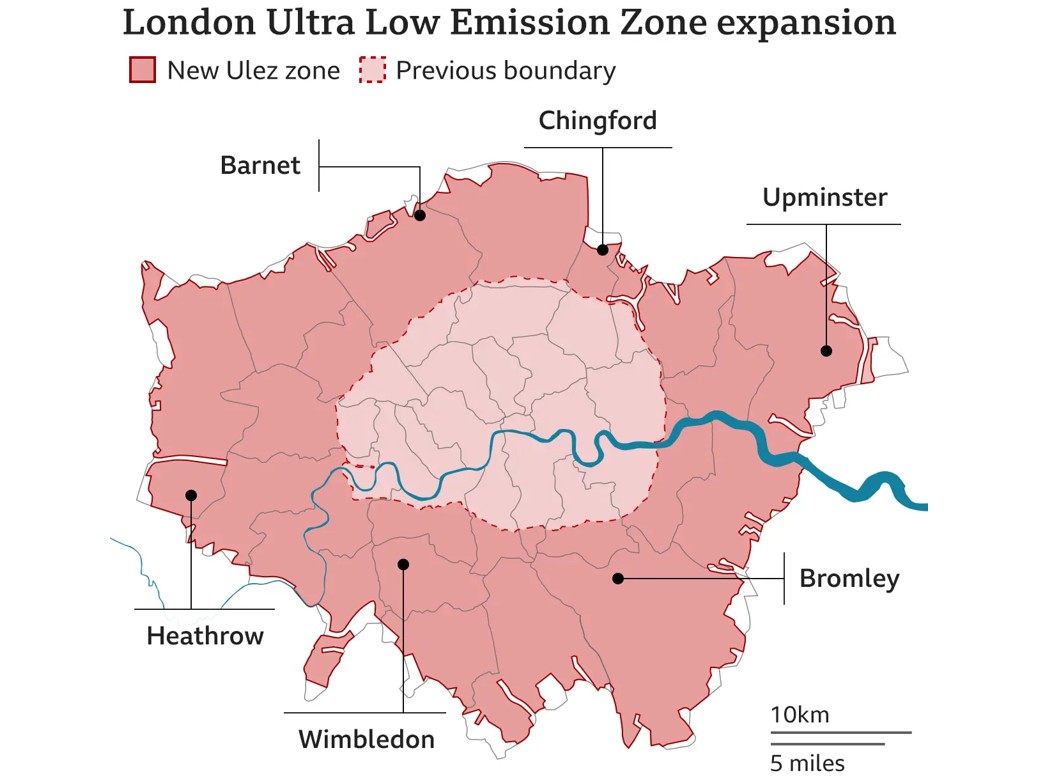
Figure 1: Image showing the London-wide Ultra Low Emission Zone (ULEZ) boundary.
What does ULEZ actually do?
ULEZ sets minimum exhaust emissions standards for vehicles driving in London. Most petrol cars and vans need to meet at least Euro 4 standards, while most diesel cars and vans need to meet Euro 6 standards. These standards are based on measured emissions of pollutants such as NOx and particulate matter, including PM2.5, rather than on engine size or power output. Vehicles that do not meet these standards, and are not exempt, must pay a daily charge if they are driven within the zone. This creates a clear financial incentive to use cleaner vehicles, switch to public transport, cycle, walk, or avoid unnecessary journeys.
The zone was first introduced in central London and has since been expanded to cover all London boroughs from 29 August 2023. By targeting the most polluting vehicles in the areas where people live, work and go to school, ULEZ is designed to cut traffic emissions where they cause the most harm rather than acting as a general fuel or road tax on all drivers.
Evidence from national monitoring networks shows that roadside NO2 and particulate concentrations are highest close to busy roads and that road transport has been a major contributor to local air pollution. Reducing emissions from vehicles is therefore a key part of national and London plans to improve air quality and protect public health.
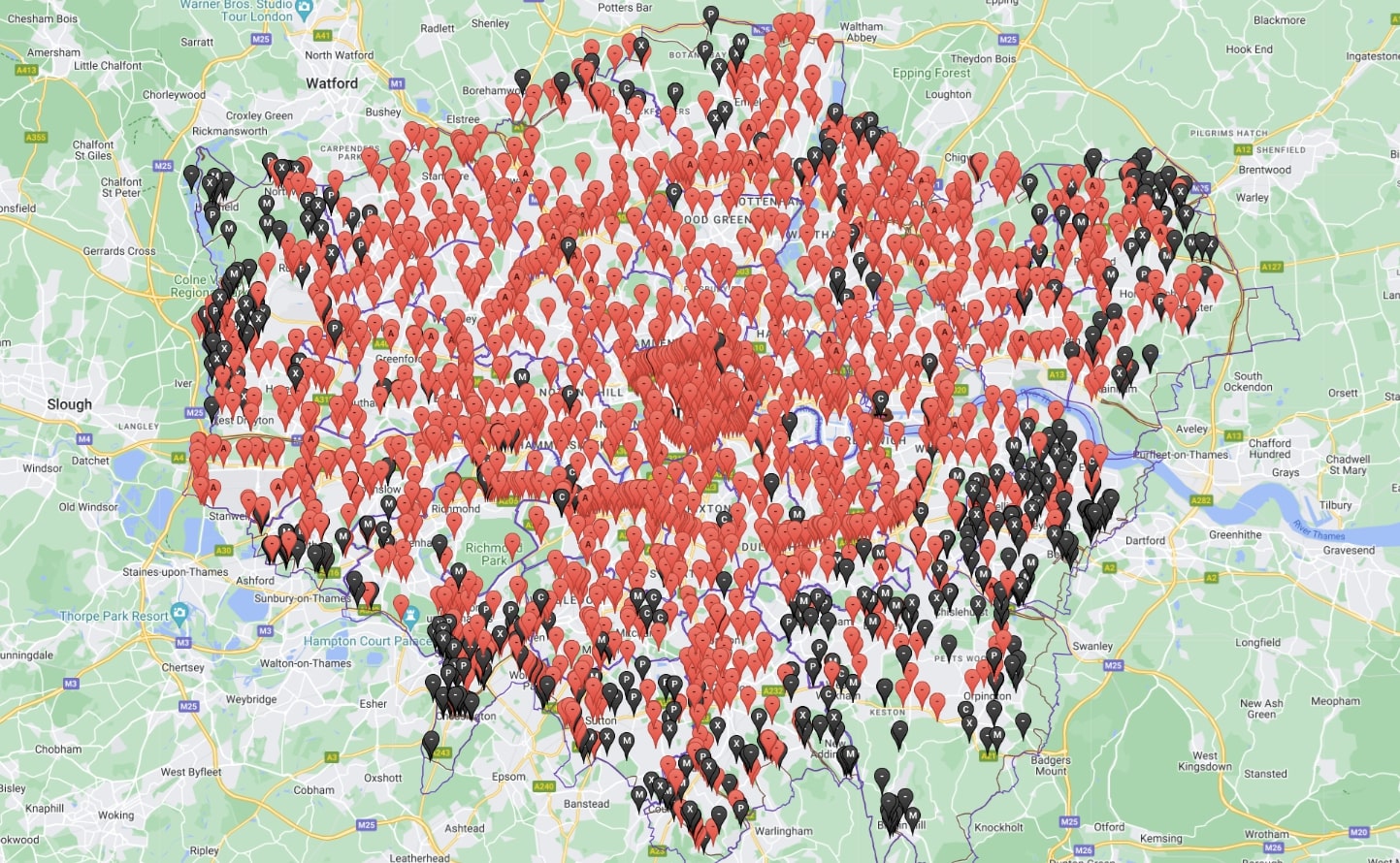
Figure 2: Image showing Automatic Number Plate Recognition (ANPR) cameras used to enforce ULEZ charges in London.
How much does ULEZ cost?
If your vehicle does not meet the ULEZ emissions standards and is not eligible for an exemption or discount, you must pay a daily charge of £12.50 to drive within the zone. This applies to most cars, motorcycles, vans and specialist vehicles up to and including 3.5 tonnes, as well as minibuses up to and including 5 tonnes. The charge runs from midnight to midnight; if you drive in the zone before and after midnight on the same trip, this counts as two ULEZ charging days.
ULEZ operates 24 hours a day, 7 days a week, every day of the year except Christmas Day (25 December). The ULEZ charge is separate from other schemes such as the Congestion Charge and the London-wide Low Emission Zone (LEZ), which have different rules, prices and areas.
Which vehicles have to pay?
Whether your vehicle has to pay depends on its exhaust emissions rather than its age, size or engine capacity. The ULEZ standards are based on official emissions data for pollutants such as NOx and particulate matter (including PM2.5), not on how big the engine is. This means that some newer, larger engines (for example modern 3.0 litre Euro 6 vehicles) can produce much lower NOx and PM emissions than older small engines, such as older 1.2 litre petrol cars, and may therefore meet the ULEZ standard even though the engine size is bigger.
As a rule of thumb, most petrol cars registered from 2005 onwards meet Euro 4 and are likely to comply, while many diesel cars registered before around 2015 do not meet Euro 6 and therefore usually have to pay. Electric vehicles do not pay ULEZ because they have no exhaust emissions. Some vehicles, such as those used by disabled people or certain specialist vehicles, may be exempt or eligible for discounts under specific criteria set by Transport for London (TfL).
Passing an MOT test does not automatically mean that a vehicle is ULEZ compliant. MOT tests check that a vehicle is roadworthy and meets basic emissions limits on the day of the test, while ULEZ compliance is based on the official emissions standard recorded on the vehicle’s registration. The only reliable way to know is to use an official ULEZ vehicle checker that looks up your number plate against the national vehicle database.
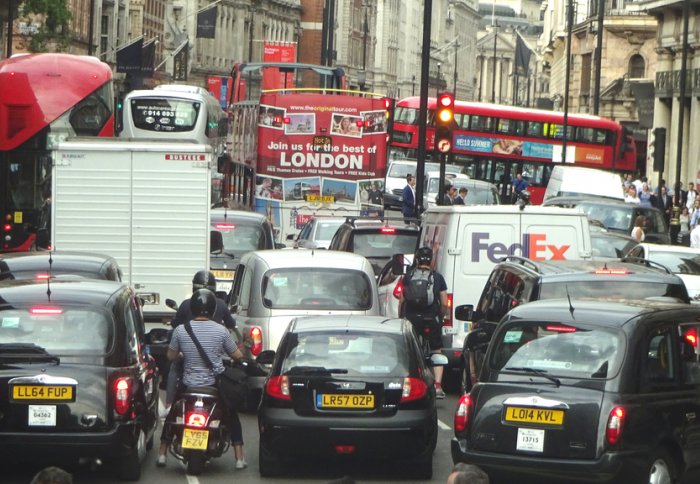
Figure 3: Image showing traffic in London, a major source of roadside NOx and PM2.5 pollution.
Does ULEZ actually improve air quality?
Evidence from the Mayor of London and TfL indicates that ULEZ has contributed to substantial reductions in harmful roadside pollution. Since the first ULEZ was introduced in central London in 2019, roadside nitrogen dioxide (NO2) concentrations are estimated to be significantly lower than they would have been without the scheme, with reductions reported across central, inner and outer London as the zone has expanded.
The London-wide ULEZ expansion has further cut emissions from cars and vans in outer London compared with a scenario where the expansion did not happen. Estimates suggest that nitrogen oxides (NOx) emissions from these vehicles are lower across all outer London boroughs, and exhaust particulate matter (PM2.5) emissions from cars and vans are also markedly reduced. These improvements add to longer-term national trends, where roadside NO2 concentrations and traffic-related emissions have been falling as cleaner vehicles replace older ones and air quality policies take effect.
Experience from other UK cities using Clean Air Zones (CAZ) supports the idea that targeted charging schemes can help bring pollution within legal limits. In Leeds, for example, a joint review by Leeds City Council and central government concluded in October 2020 that the planned charging Clean Air Zone was no longer required because businesses had upgraded to cleaner vehicles more quickly than expected and air quality had improved sufficiently to meet legal limits. As a result, the charging CAZ was not introduced. This shows that when vehicle fleets become cleaner, schemes can sometimes be scaled back while air quality remains compliant.
National guidance from public health agencies describes poor air quality as the largest environmental risk to public health in the UK. By reducing exposure to pollutants such as NO2 and PM2.5, schemes like ULEZ and other Clean Air Zones are intended to reduce the burden of cardiovascular and respiratory disease and help prevent early deaths linked to long-term pollution exposure.
How is ULEZ enforced?
ULEZ is enforced using Automatic Number Plate Recognition (ANPR) cameras positioned on roads entering and within the zone. When a vehicle passes a camera, its number plate is read and checked against a central database to see whether it meets the ULEZ emissions standards or whether the daily charge has already been paid for that day. There are no toll booths or barriers; the system works automatically in the background.
If a non-compliant vehicle is driven in the zone without paying the charge, a Penalty Charge Notice (PCN) can be issued to the registered keeper. For cars, motorcycles and vans that do not meet the standard, the penalty is higher than the daily charge but may be reduced if paid promptly. This enforcement approach is intended both to ensure fairness between drivers and to maintain the air quality benefits of the scheme.
Quick summary
ULEZ is a London-wide scheme that targets the most polluting vehicles in order to cut harmful exhaust emissions and improve public health. The standards are based on pollutants such as NOx and PM2.5 rather than engine size, so newer large-engined vehicles can sometimes be cleaner than older small-engined cars. Most modern petrol cars and newer diesel cars meet the required standards and do not have to pay, but many older petrol and especially older diesel vehicles must pay a £12.50 daily charge if they are driven in the zone. The scheme operates 24/7 across all London boroughs (except on Christmas Day), is enforced automatically by cameras, and has already contributed to lower roadside NO2 and particle pollution compared with a scenario where it had not been introduced.
Check your vehicle or costs
Before you travel, it is important to check whether your vehicle meets the standards and how often you are likely to drive in the zone. This helps you to understand your potential costs and to decide whether changing your vehicle or using other modes of transport might be better for you in the longer term.
References (Harvard style)
- Department for Environment, Food and Rural Affairs (Defra) (2025) ENV02 – air quality statistics. GOV.UK. Available at: https://www.gov.uk/government/statistical-data-sets/env02-air-quality-statistics (Accessed 11 December 2025).
- Department for Environment, Food and Rural Affairs (Defra) (2025) Emissions of air pollutants in the UK: summary. GOV.UK. Available at: https://www.gov.uk/government/statistics/emissions-of-air-pollutants/emissions-of-air-pollutants-in-the-uk-summary (Accessed 11 December 2025).
- Department for Environment, Food and Rural Affairs (Defra) (2025) Emissions of air pollutants in the UK – nitrogen oxides (NOx). GOV.UK. Available at: https://www.gov.uk/government/statistics/emissions-of-air-pollutants/emissions-of-air-pollutants-in-the-uk-nitrogen-oxides-nox (Accessed 11 December 2025).
- Public Health England (2019) Improving outdoor air quality and health: review of interventions. GOV.UK. Available at: https://www.gov.uk/government/publications/improving-outdoor-air-quality-and-health-review-of-interventions (Accessed 11 December 2025).
- UK Health Security Agency (2022) Air pollution: applying All Our Health. GOV.UK. Available at: https://www.gov.uk/government/publications/air-pollution-applying-all-our-health/air-pollution-applying-all-our-health (Accessed 11 December 2025).
- Transport for London (n.d.) Ultra Low Emission Zone (ULEZ). Available at: https://tfl.gov.uk/modes/driving/ultra-low-emission-zone (Accessed 11 December 2025).
- Transport for London (n.d.) ULEZ: where and when. Available at: https://tfl.gov.uk/modes/driving/ultra-low-emission-zone/ulez-where-and-when (Accessed 11 December 2025).
- Leeds City Council (2020) Leeds’ Clean Air Zone has achieved its aims early and is no longer required, joint review finds. News release, 13 October. Available at: https://news.leeds.gov.uk/news/leeds-clean-air-zone-has-achieved-its-aims-early-and-is-no-longer-required-joint-review-finds (Accessed 11 December 2025).