
Hybrid vs Electric Cars: HEV, MHEV, PHEV & EV Explained
Modern “low emission” cars come with a confusing mix of badges: hybrid, self-charging, mild hybrid, plug-in hybrid and fully electric. This guide explains what each type actually does under the bonnet, how much they can cut emissions, and how they are treated by London’s Ultra Low Emission Zone (ULEZ) and Clean Air Zones (CAZ) across the UK. It is based on UK government and environmental agency guidance and is written for drivers who want clear answers without the jargon.
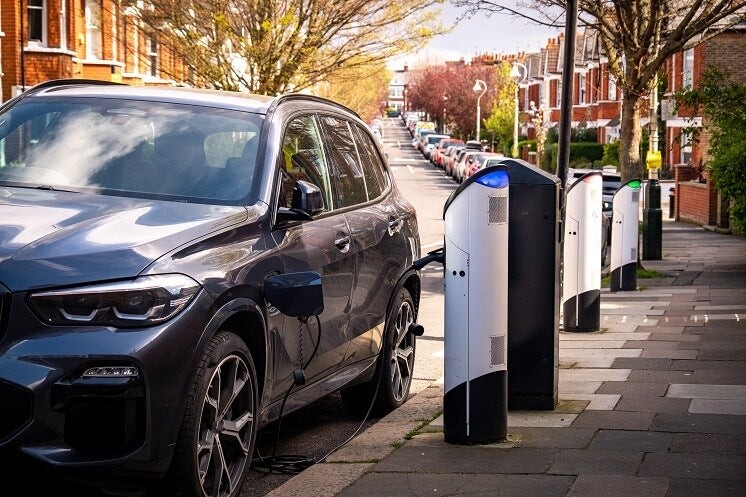
Figure 1: Hybrid and electric cars charging on a UK street. All use electricity, but in very different ways.
At a glance: HEV vs MHEV vs PHEV vs EV
All hybrid and electric vehicles use an electric motor, but they do not all work the same way. The table below summarises the main differences in a compact format so you can quickly see how each vehicle type behaves on the road and how it fits with ULEZ and Clean Air Zones.
| Type | Engine & electric system | Electric-only driving | ULEZ & CAZ treatment |
|---|---|---|---|
| HEV Hybrid Electric Vehicle |
|
|
|
| MHEV Mild Hybrid Electric Vehicle |
|
|
|
| PHEV Plug-in Hybrid Electric Vehicle |
|
|
|
| EV Battery Electric Vehicle |
|
|
|
What counts as a “low emission” car in UK policy?
In UK statistics, an Ultra Low Emission Vehicle (ULEV) is usually defined as a vehicle that emits less than 75 g of CO2 per kilometre at the tailpipe. These are mainly plug-in hybrids and fully electric vehicles, although a few very efficient conventional and hybrid models can also meet the threshold.
ULEZ and Clean Air Zones work differently. They focus on Euro emissions standards for nitrogen oxides (NOx) and particulate matter (PM), not on the CO2 figure on the car’s brochure. For cars and light vans, the common thresholds are:
- Petrol and petrol-hybrid: at least Euro 4 to avoid daily charges.
- Diesel and diesel-hybrid: at least Euro 6 to avoid daily charges.
A “low CO2” car that is not Euro 4/6 can still be charged, while a larger engine car that meets the Euro limit will not be charged. The key for air quality schemes is the emissions standard, not engine size or “eco” branding.
Full hybrids (HEV): efficient in traffic, still fossil fuel cars
A hybrid electric vehicle (HEV) has both an internal combustion engine and one or more electric motors powered by a battery. The battery is charged automatically by the engine and by energy recovered during braking. You cannot plug these cars in.
At low speeds or when pulling away, the car may run partly or completely on the electric motor, switching to the engine as speed or power demand increases. In city driving, hybrids can be more efficient than older petrol cars because they:
- Shut the engine off when stopped (start/stop).
- Use electric assistance to smooth acceleration in stop–start traffic.
- Recover energy that would otherwise be wasted as heat in the brakes.
However, they still burn petrol (or sometimes diesel) on most longer journeys, so they are not zero emission vehicles. Fuel costs and climate impact still depend heavily on journey length, driving style and maintenance.
How HEVs are treated by ULEZ and CAZ
For ULEZ and most Clean Air Zones, hybrids are grouped with conventional petrol or diesel cars:
- Petrol hybrids must meet at least Euro 4.
- Diesel hybrids must meet at least Euro 6.
Most modern petrol HEVs on sale now meet Euro 6 and are compliant. Some older hybrids, especially early diesel hybrids or petrol models from the mid-2000s, may not meet the required Euro standard and can still be charged.
Common misconceptions about HEVs
- “All hybrids are ULEZ compliant” – false. Only those that meet Euro 4/6 NOx and PM limits are exempt from charges.
- “Hybrids are as clean as electric cars” – false. They reduce fuel use compared with many older cars, but still produce tailpipe emissions whenever the engine runs.
- “Any hybrid badge means ultra low emissions” – not necessarily. Official CO2 figures vary widely; some hybrids prioritise performance over efficiency.
Mild hybrids (MHEV): small assist, not an electric car
A mild hybrid (often badged MHEV) is a conventional petrol or diesel car with a relatively small electric motor and battery. The electric system helps restart the engine, powers some onboard systems and can give a brief boost under acceleration.
Mild hybrids can offer a modest improvement in fuel economy and CO2 emissions, especially in heavy traffic, but the engine is still doing almost all of the work. For ULEZ and CAZ purposes, an MHEV is essentially just an efficient Euro 6 petrol or diesel car.
How MHEVs are treated by ULEZ and CAZ
Mild hybrids have no separate ULEZ category. They must meet the same standards as other petrol or diesel vehicles:
- Euro 4 for petrol MHEVs.
- Euro 6 for diesel MHEVs.
Common misconceptions about MHEVs
- “Mild hybrid means electric driving” – false. The engine still powers the car; the motor only assists.
- “Any mild hybrid is future-proof for ULEZ” – not always. Older diesel MHEVs that are only Euro 5 will still face charges.
Plug-in hybrids (PHEV): can be very clean – if you plug them in
Plug-in hybrid electric vehicles (PHEVs) have both a combustion engine and a larger battery that can be charged from the mains. Many have 20–40 miles of official electric-only range, which can cover most day-to-day trips if drivers charge regularly at home or work.
When driven mostly in electric mode, PHEVs can deliver low tailpipe CO2 and NOx for local trips, while still offering long range on the engine for holidays and motorways. For this reason, many PHEVs are counted as ultra low emission vehicles in official statistics.
In real-world driving, however, emissions depend heavily on behaviour. If the car is rarely charged or mostly driven long distances on the engine, the weight of the battery and motor can mean fuel use and CO2 emissions are much higher than laboratory figures suggest.
How PHEVs are treated by ULEZ and CAZ
For charging purposes, PHEVs are still treated as petrol or diesel vehicles:
- Petrol PHEVs must meet at least Euro 4.
- Diesel PHEVs must meet at least Euro 6.
Most recent PHEVs sold in the UK meet these standards and are ULEZ and CAZ compliant, but some earlier models – especially diesels – may not. There is currently no extra ULEZ discount just for being plug-in rather than conventional hybrid.
Common misconceptions about PHEVs
- “PHEVs are always the greenest option” – not automatically. They can be very low emission if charged often and used mainly on electricity, but perform worse if seldom charged.
- “PHEVs are treated as electric for ULEZ/CAZ” – false. They still have to meet the petrol/diesel Euro standards to avoid charges.
Battery electric vehicles (EV): zero tailpipe emissions
A battery electric vehicle (EV or BEV) has no combustion engine at all. It uses a large battery to power one or more electric motors, and is charged from the electricity grid. While driving, there are no tailpipe emissions of NOx, PM, CO or CO2. This makes EVs particularly effective at cutting roadside air pollution in busy urban areas.
From a climate perspective, the total impact of an EV depends on how the electricity is generated and how the vehicle is manufactured. Environmental agency assessments show that, on average, electric cars already have significantly lower greenhouse gas emissions over their life cycle than comparable petrol or diesel cars, and this gap is expected to widen as the grid gets cleaner.
EVs still produce non-exhaust emissions from tyre and brake wear, which contribute to particulate pollution and microplastics. Switching to EVs therefore needs to be combined with reducing unnecessary trips, and encouraging walking, cycling and public transport to tackle traffic-related pollution overall.
How EVs are treated by ULEZ and CAZ
Because there is no tailpipe, EVs automatically meet the NOx and PM standards used in ULEZ and Clean Air Zones. Under current schemes:
- Electric cars and light vans are not charged in London’s ULEZ.
- Most CAZ schemes across England also exempt electric cars and vans.
How ULEZ and Clean Air Zones treat hybrids and EVs
London’s ULEZ and government-backed Clean Air Zones use Euro emission standards to decide which vehicles pay. For cars and light vans, the key thresholds are:
- Petrol and petrol-hybrid: Euro 4 or better for NOx.
- Diesel and diesel-hybrid: Euro 6 or better for NOx and PM.
Hybrids (HEV, MHEV and PHEV) are all classed as petrol or diesel vehicles. There is no separate “hybrid” standard: a non-hybrid petrol car and a petrol hybrid with the same Euro rating are treated in the same way. EVs, by contrast, have zero tailpipe emissions and meet the standards by design.
Clean Air Zones in cities such as Birmingham, Bristol and Sheffield follow similar minimum standards for cars and vans, although the zone “class” (A, B, C or D) determines which vehicle categories are charged. As with ULEZ, most private petrol and diesel cars must meet Euro 4 or Euro 6, while electric cars are exempt.
For more detail and up-to-date rules, you can explore:
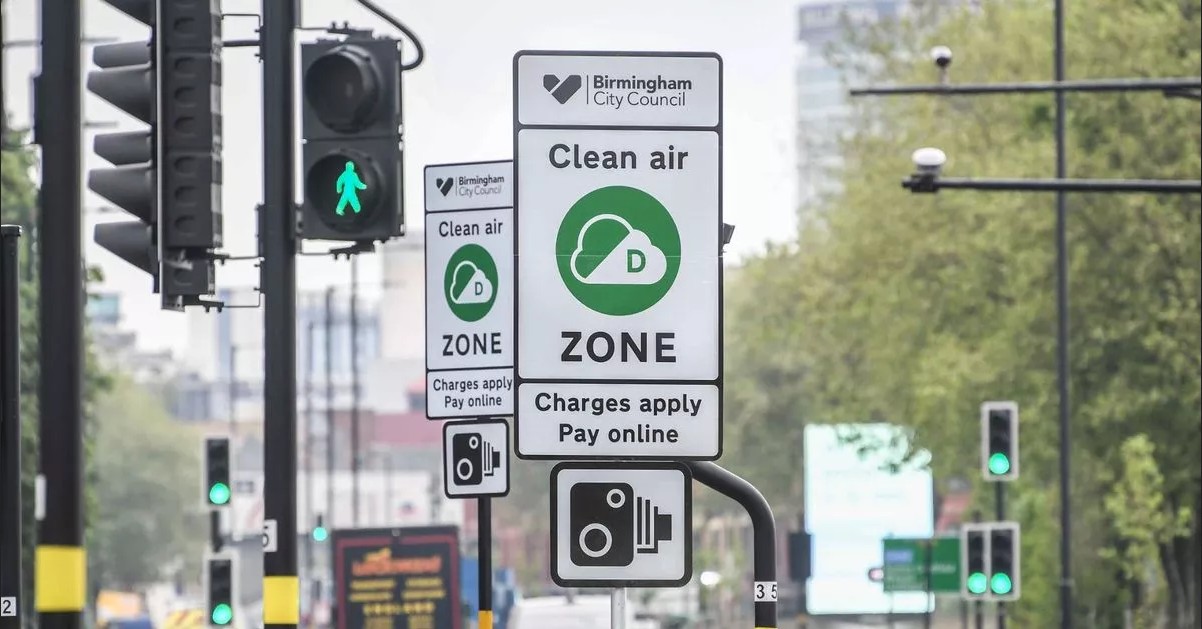
Clean Air Zones
How other Clean Air Zones work around the UK and where they apply.
Read the ULEZ guide →
ULEZ Fines and Penalties
What happens if you dont pay the charge in time, hom much the fine is and how to deal with PCN
Understand Euro standards →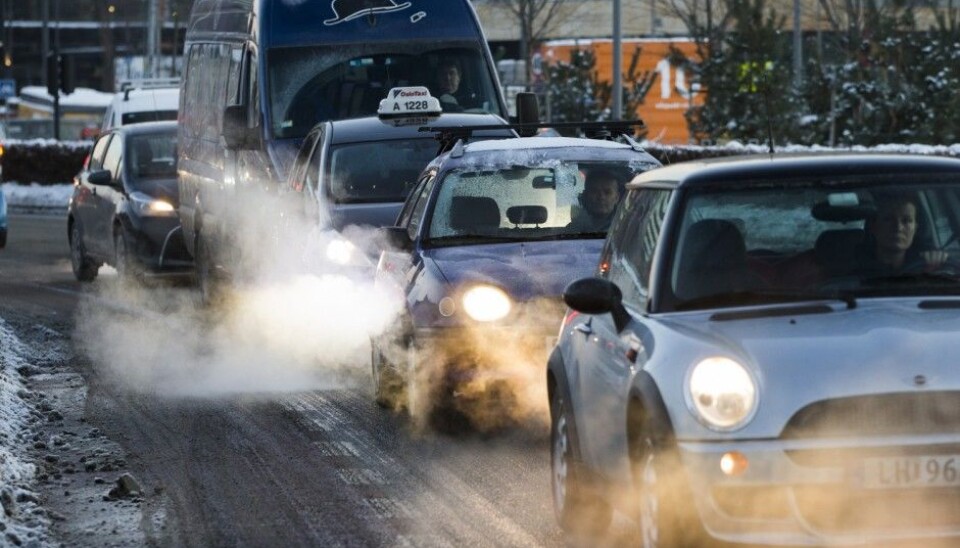
Vehicle pollution explained
Breaks down the main pollutants from vehicles – exhaust gases, particulates, tyre and brake wear, and fluid leaks – and why they matter for health.
Learn about pollution →Common myths about hybrids and electric cars
Marketing language around “eco”, “self-charging” and “ultra low emissions” can be confusing. Here are some frequent myths and what the evidence says.
-
Myth 1: “Hybrid automatically means ULEZ compliant.”
Only hybrids that meet Euro 4 (petrol) or Euro 6 (diesel) for NOx and PM are exempt from charges. -
Myth 2: “Mild hybrids are basically electric cars.”
Mild hybrids cannot normally drive on electricity alone. The engine still powers the car; the motor just helps. -
Myth 3: “Plug-in hybrids always have very low emissions.”
PHEVs can be very low emission if charged often and used mainly on electricity, but real-world emissions rise sharply if driven mostly on the engine. -
Myth 4: “Electric cars have zero emissions overall.”
EVs have zero tailpipe emissions and much lower life-cycle emissions on average than petrol and diesel cars, but there are still emissions from electricity generation and manufacturing. -
Myth 5: “A small old petrol car is always cleaner than a newer big car.”
Euro 6 engines with effective after-treatment can emit far less NOx and PM than older small cars built to weaker standards. For air quality, the Euro standard matters more than engine size.
Choosing a car with future ULEZ and CAZ rules in mind
When choosing your next car, thinking about ULEZ, Clean Air Zones and future policy changes can save money and hassle later. UK government plans will end sales of new pure petrol and diesel cars and vans from 2035, with a transition period between 2030 and 2035 in which new hybrids and plug-in hybrids may still be sold alongside fully electric models.
As a rough guide:
- If you mostly drive in and around cities, an EV or well-used PHEV (charged often and used mainly on electricity) will give the biggest local air-quality benefits.
- If an EV is not practical yet, a Euro 6 petrol or petrol-hybrid is often a good compromise for ULEZ and CAZ compliance and lower NOx emissions than many diesels.
- Whatever you drive, keeping the vehicle well maintained, choosing suitable tyres and driving smoothly can cut fuel use, CO2 and non-exhaust pollution.
Useful tools and related guides
The guides below go into more detail on how ULEZ and Clean Air Zones work, and how vehicle emissions standards and pollution types fit together. They are written in the same plain-English style as this page.
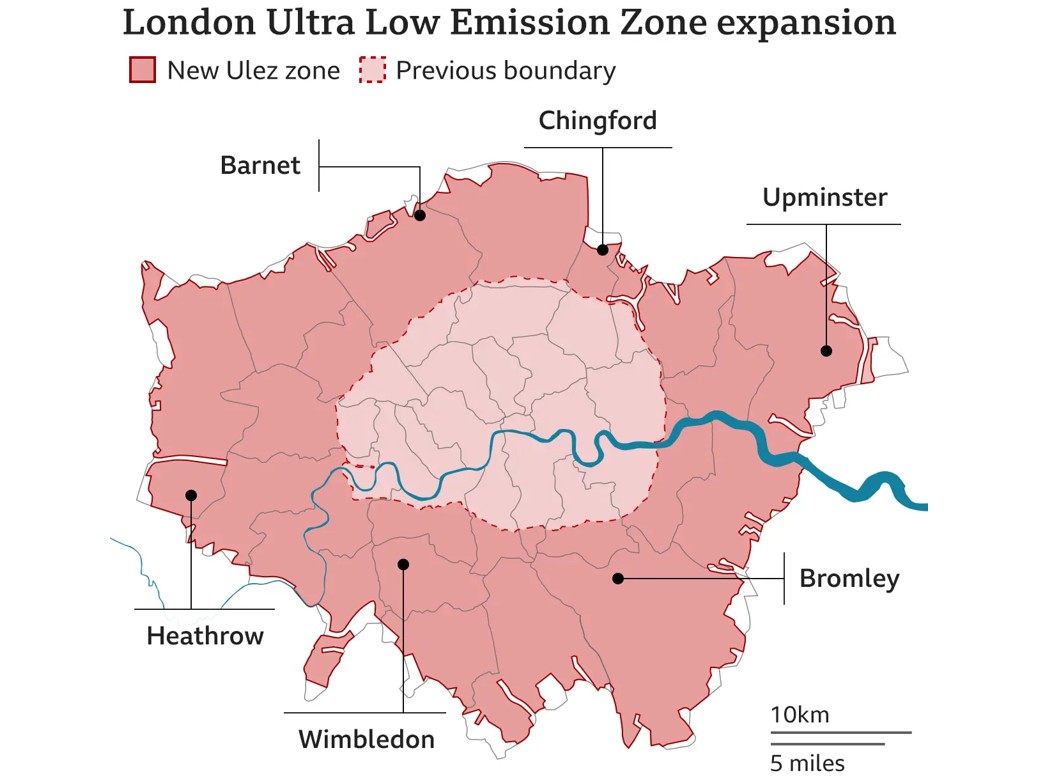
What is ULEZ?
A simple overview of London’s Ultra Low Emission Zone: where it applies, which vehicles pay, and how discounts and exemptions work.
Read the ULEZ guide →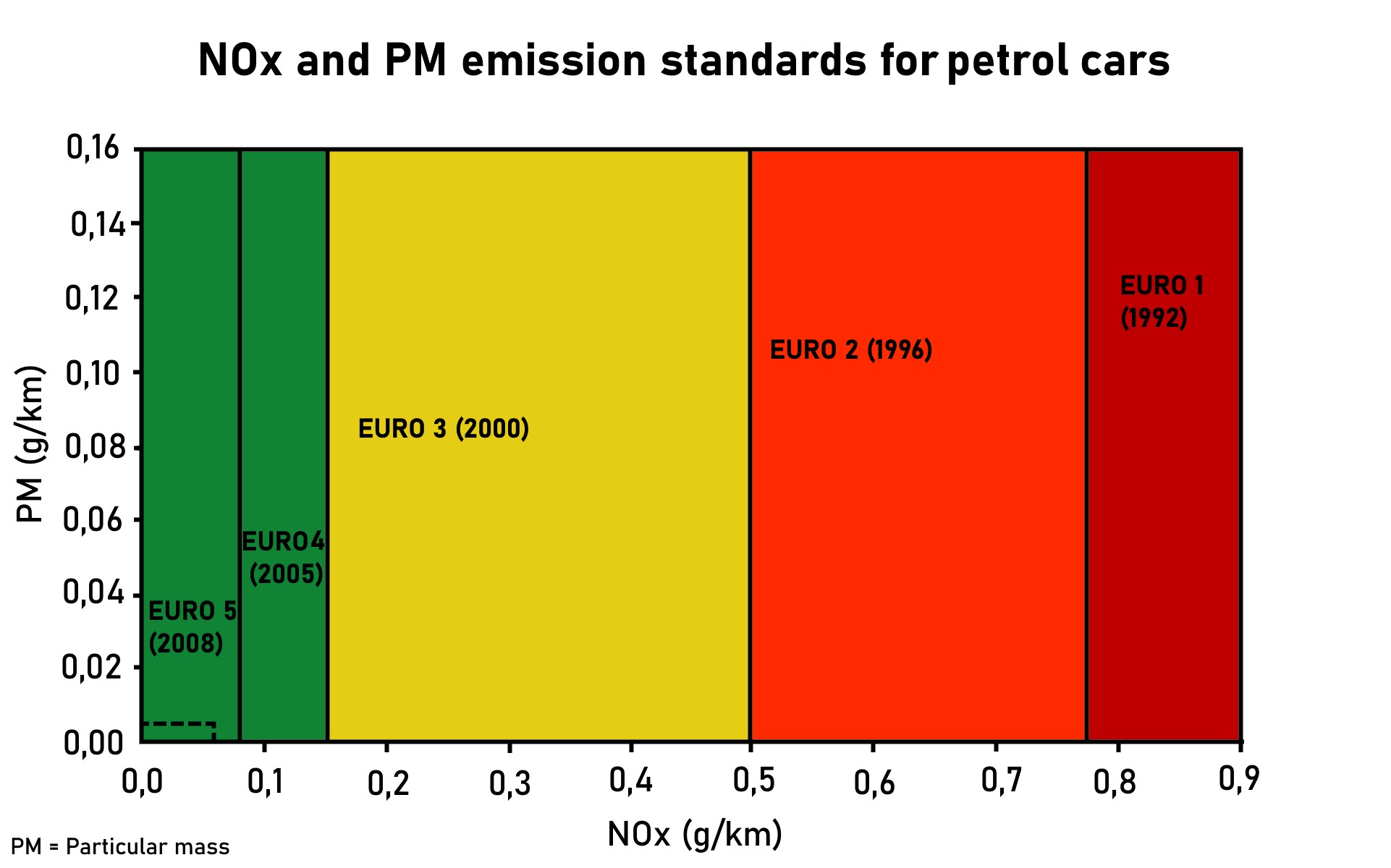
Euro standards explained
Clear explanations of Euro 1–6/6d, how NOx and PM limits changed over time, and how to find your car’s standard from official records.
Understand Euro standards →
Vehicle pollution explained
Breaks down the main pollutants from vehicles – exhaust gases, particulates, tyre and brake wear, and fluid leaks – and why they matter for health.
Learn about pollution →You can also use the calculators below to see how these rules affect your own vehicle:
References (Harvard style)
- Department for Transport (DfT) (2025) Vehicle licensing statistics: notes and definitions. GOV.UK. Available at: https://www.gov.uk (Accessed 11 December 2025).
- Department for Environment, Food & Rural Affairs (Defra) (2022) Air quality: Clean Air Zone framework for England. GOV.UK. Available at: https://www.gov.uk (Accessed 11 December 2025).
- Department for Transport (DfT) (2021) Hybrid, electric and hydrogen fuel cell systems: guidance for MOT testers. GOV.UK. Available at: https://www.gov.uk (Accessed 11 December 2025).
- Vehicle Certification Agency (2021) Cars and fuel options. Bristol: VCA. Available at: https://www.vehicle-certification-agency.gov.uk (Accessed 11 December 2025).
- Transport for London (2023) Ultra Low Emission Zone – emissions standards and compliance. London: TfL. Available at: https://tfl.gov.uk (Accessed 11 December 2025).
- HM Government (2025) Phasing out the sale of new petrol and diesel cars and vans from 2030 – government response. GOV.UK. Available at: https://www.gov.uk (Accessed 11 December 2025).
- European Environment Agency (2024) CO₂ emissions performance of new passenger cars in Europe. EEA Indicator. Available at: https://www.eea.europa.eu (Accessed 11 December 2025).
- European Environment Agency (2024) Electric vehicles – environmental and climate impacts. Copenhagen: EEA. Available at: https://www.eea.europa.eu (Accessed 11 December 2025).
- Clackmannanshire Council (2025) Our guide to electric vehicles. Clackmannanshire Council. Available at: https://www.clacks.gov.uk (Accessed 11 December 2025).
- Transport & Environment (2020) The plug-in hybrid con. Brussels: T&E. (Summary of real-world PHEV emissions studies).